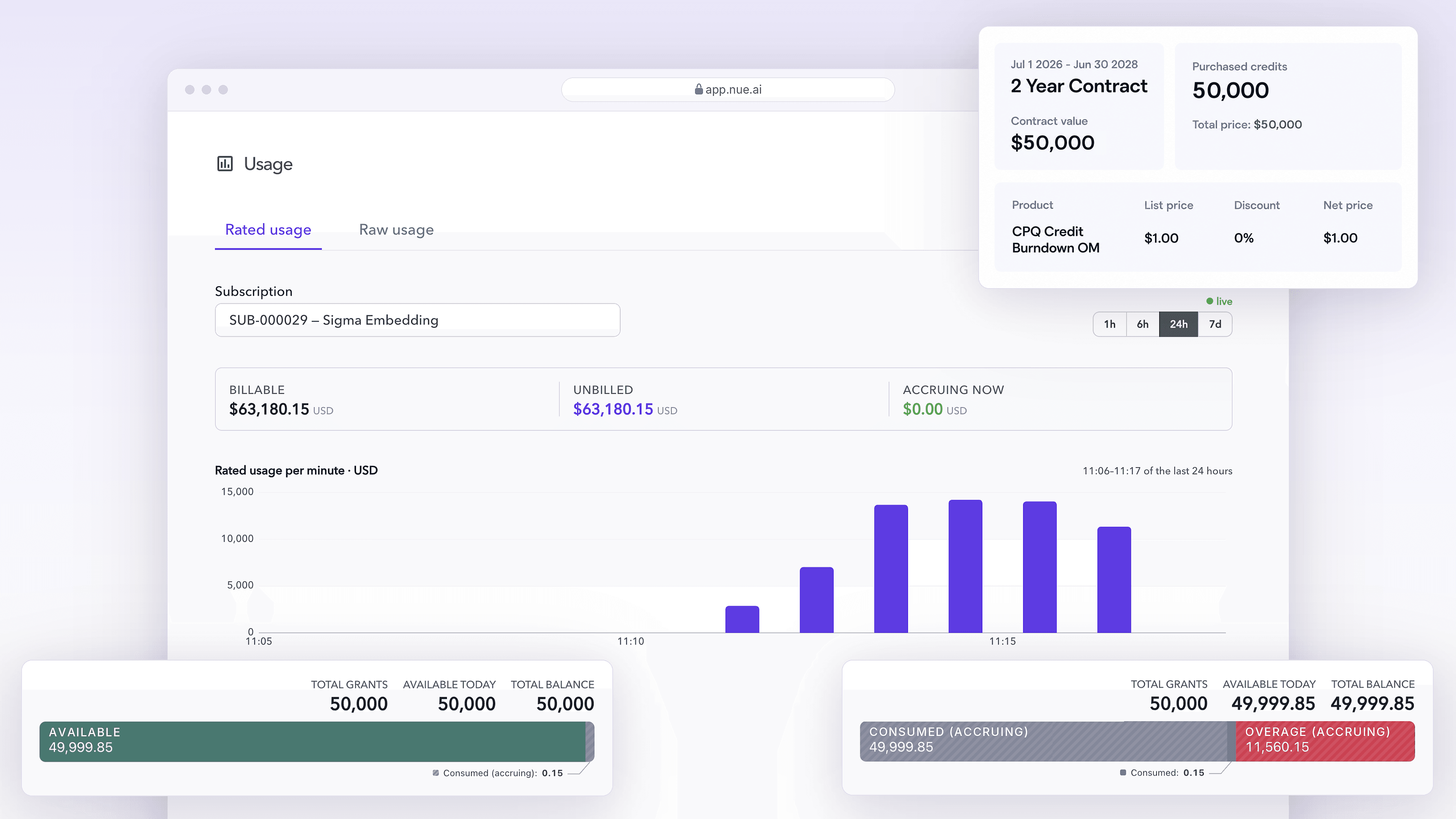
Nue launches Metering to help AI companies turn usage into accurate revenue

Caroline Anderson, Senior Product Marketing Manager
25.9B+usage events processed each month
|
10K+usage events processed per second, per business |
Nue now meters, rates, and bills usage on the same pricing engine that priced the quote, so ramps, tiers, credits, and amendments flow from contract to invoice without being rebuilt in a second system.
Companies selling on consumption have always needed two systems: one to capture events and one to price them, with the deal terms re-entered by hand in between. Nue now rates usage directly against the order-time price snapshot from the quote, so consumption becomes accurate revenue without a second system in the middle.
For companies that sell on consumption, the hardest problem is not capturing usage. It is keeping the invoice aligned to the deal that was actually sold.
Most stacks split that work across two systems. One captures events. Another prices them for billing. In between, negotiated terms like ramps, tier thresholds, credits, and amendments are recreated downstream. That second copy is where drift starts.
Nue removes that translation layer. Nue meters, rates, and bills usage on the same pricing engine that priced the quote, using the order-time price snapshot captured when the deal closed. The price you quote is the price you rate, and the invoice reflects the contract that was signed.
Nue processes up to 10,000 events per second, so scale is part of the architecture, not a tradeoff against contract integrity.
Higher throughput, longer backfill windows, and faster ingestion all matter. But they do not solve the core issue if contract-specific pricing still has to be recreated in a second system.
That is where drift begins. A ramp, a tier boundary, or a negotiated discount gets copied downstream, then updated again at renewal or amendment. The problem is not whether usage can be captured. It is whether usage is being rated against the exact terms that were sold.
When a deal closes, Nue locks a snapshot of every commercial term agreed: price, discounts, tiers, ramps, proration. Every usage event from that point forward rates against that snapshot rather than whatever the catalog says today. A repricing next quarter never reaches a contract signed in March. There is nothing left to drift because the ramp was never re-entered in a second system. There is one copy of it.
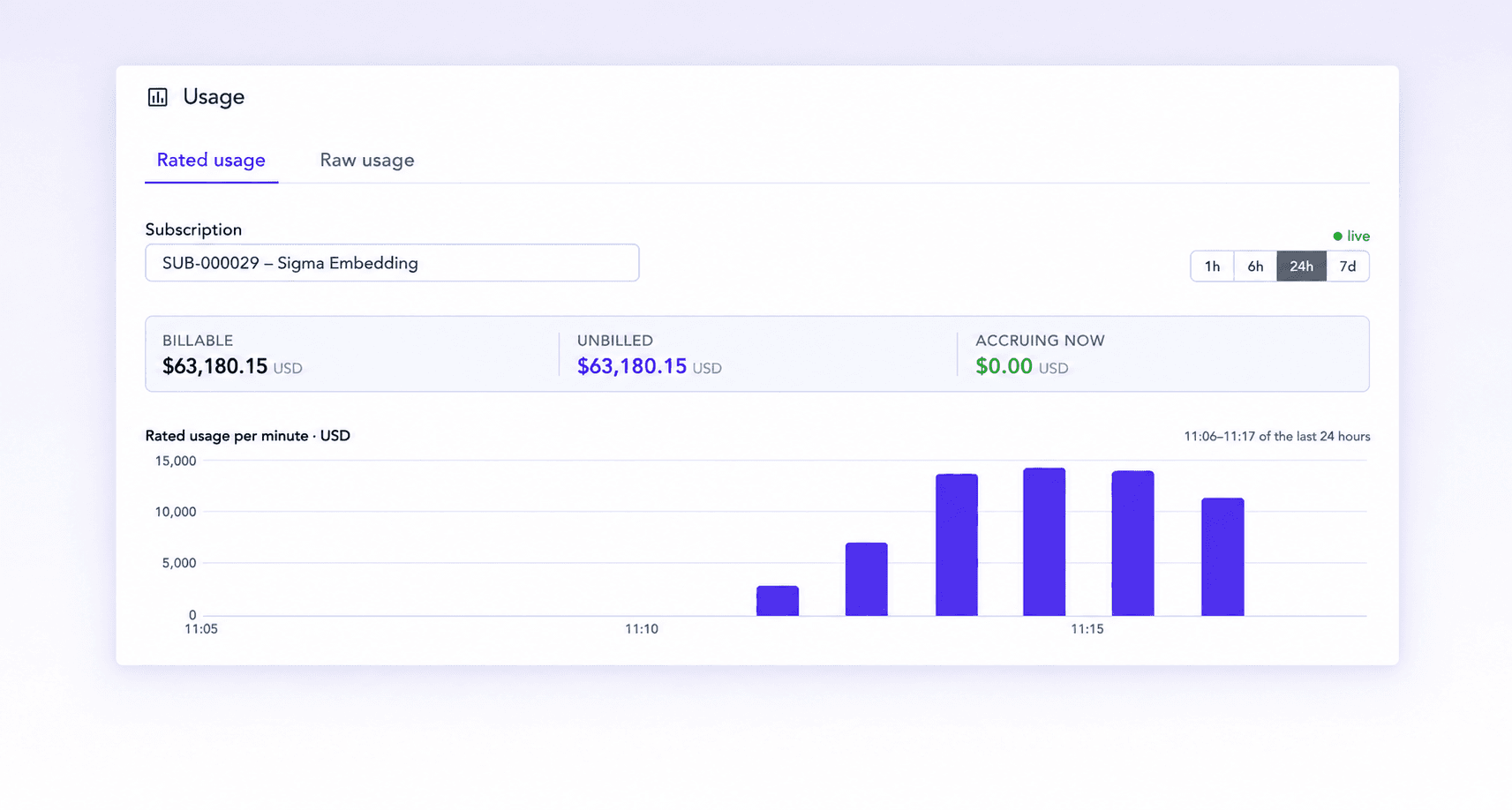
Revenue leaks don't announce themselves. They accumulate quietly until someone runs a reconciliation. In Nue, metering and billing share a system, so rated usage moves onto the invoice line without a handoff. No export, no pipeline between tools, no true-up at the end of the period, and no gap for revenue to drop through.
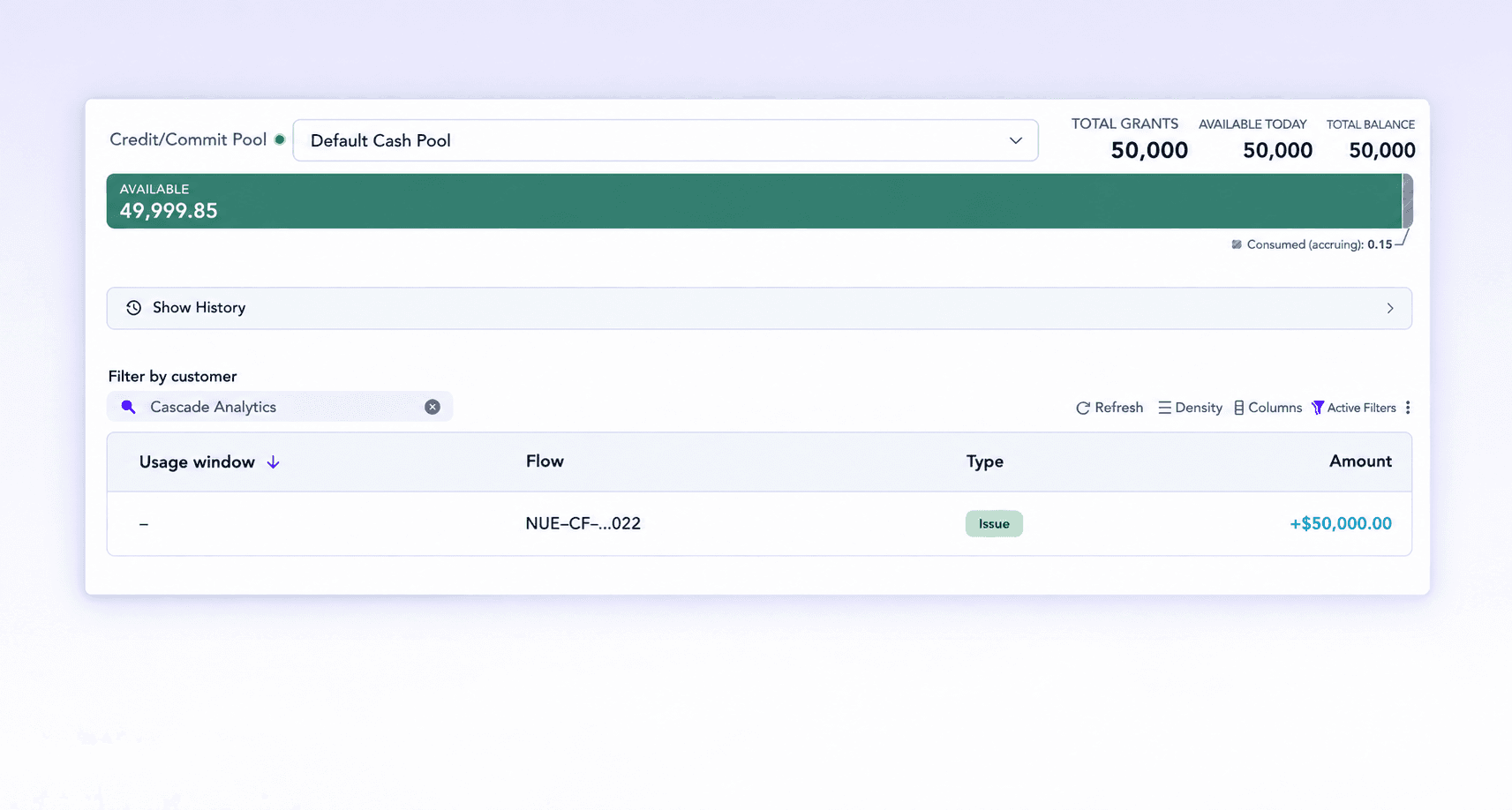
Most teams find out a customer has exhausted credits or exceeded a commit when the invoice arrives. By then, the expansion moment is gone. Nue rates consumption continuously and updates balances in near real-time, targeting under five seconds from event landing to balance draw.
Credit consumption and overage are visible while there is still time to act, not assembled at close after the window has passed.
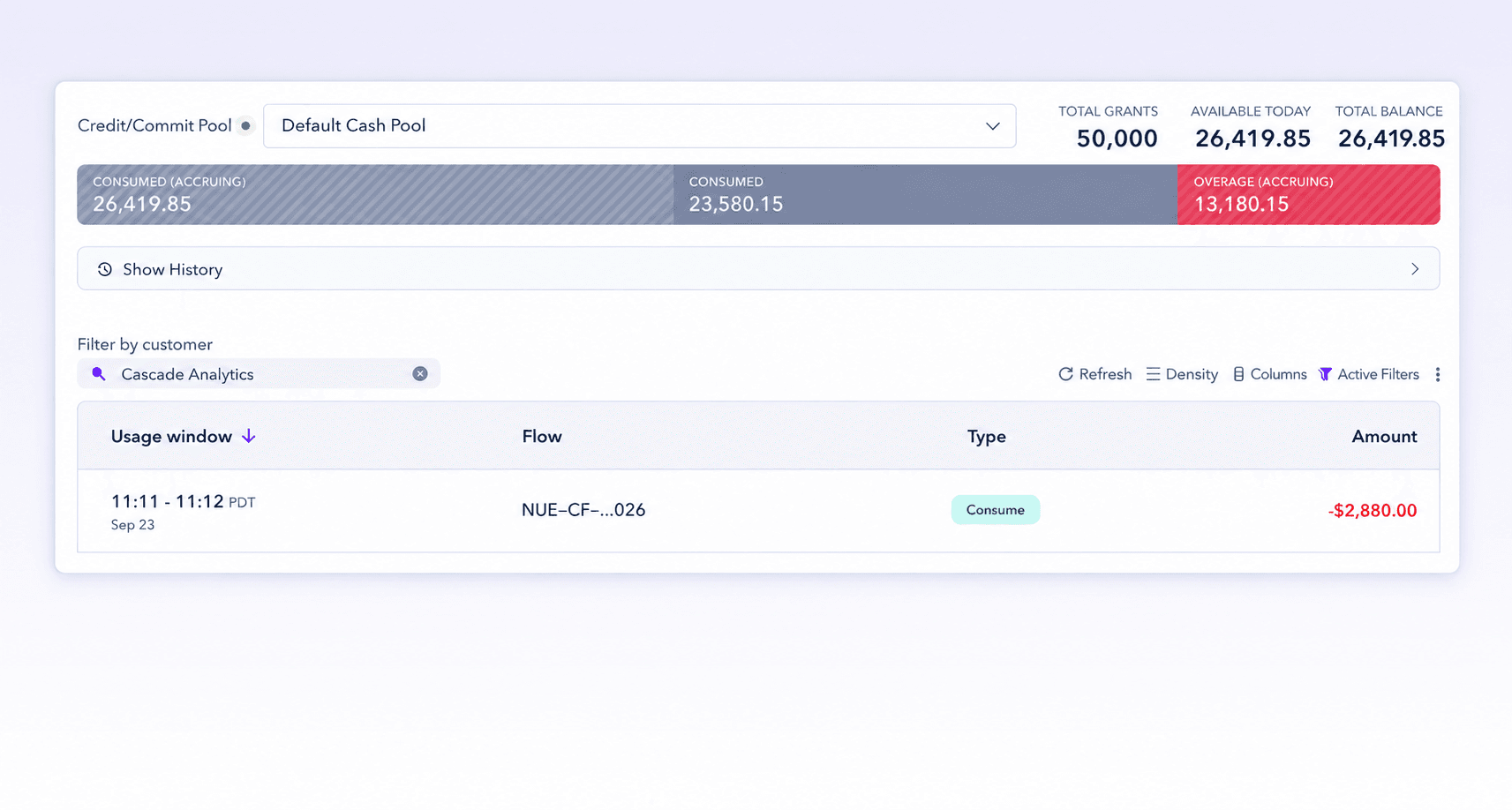
Nue Metering is not just a way to capture and rate usage. It is part of a broader monetization model. Companies can combine usage-based pricing with seat subscriptions, professional services, credits, and commits in one contract, then manage how those pieces work together in one system. That is what makes the model durable: usage is not isolated from the commercial terms, it is connected to the subscriptions, balances, and commitments that define the deal.
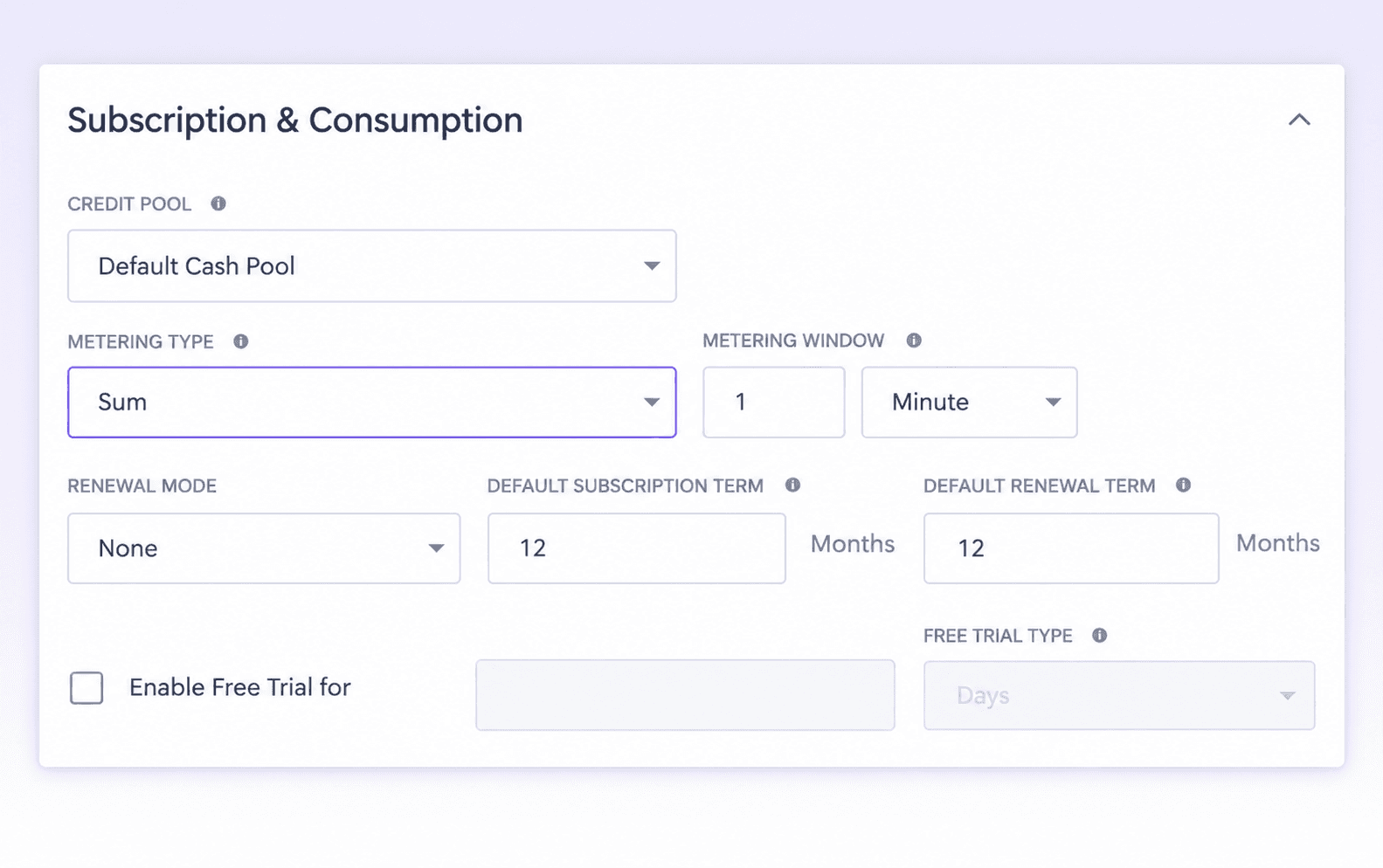
Every pricing change under a separate metering tool is an engineering ticket. New tiers, a new model, a packaging refresh. None of it ships until the backlog clears. That is why pricing roadmaps slip.
In Nue, pricing teams set how a product measures consumption and where the tiers and thresholds fall, and the change is live. One customer can carry several metrics on a single invoice from the same rated usage, with no code between them.
Metering, rating, billing, and analytics run on one system, so the next pricing model does not add a pipeline to maintain or a contract to renew.
See how Nue rates usage against the exact terms your team sold.
What happens to teams already running Nue with a separate meter?
Their quotes and commercial terms already live in Nue, so consolidating removes the second copy rather than rebuilding anything. The migration retires the translation layer, it does not re-implement the deal.
Do we have to replace our CPQ to buy this?
No. Nue metering runs on the pricing engine, not the full CPQ, so a customer locked into Salesforce CPQ through next year can take metering and billing now and retire the CPQ later without re-platforming.
What is different about rating usage in Nue?
Usage rates against the order-time snapshot captured when the deal closed, not a live catalog or a second pricing engine. The tiers, ramps, discounts, and proration that were negotiated are the ones applied at billing, because there is only one copy of them.
How much volume can Nue handle?
Up to 10,000 events per second. For reference, 110 million events a month averages about 42 per second. Peak matters more than average, so size against your peak rather than your monthly total.
What happens when a customer changes their contract midterm?
Nue splits usage at the amendment's effective date. Consumption before the change rates against the original terms and consumption after rates against the new ones, on the same invoice.
Can Nue ingest third-party consumption like AWS?
Yes. That usage arrives already rated, on the provider's schedule rather than yours, and normally sits outside the billing system until someone reconciles it in each period. Nue ingests it alongside the events it meters directly, against the same customer and the same invoice.
How quickly does a credit balance reflect usage?
Under ten seconds from event landing to balance draw at the tracked service level.
Can Nue backfill late usage?
Yes, and well past the 33-day window most metering tools cap at. Late events rate against the same order-time snapshot as everything else, so a backfilled month bills at the terms that were in force when the usage happened, not today's.
What happens to an event that does not match a product?
It stays unrated. Nue does not guess at a price, so an integration gap surfaces as unrated volume rather than an invoice at the wrong number.