Related tags
Human defined, AI executed: Guided selling architecture that scales
Open any guided selling tool and you will find a form, followed by a sequence of questions, a set of answers, and a quote at the end. The industry built a better clipboard and called it innovation. What gets positioned as innovation is actually just data collection.
When pricing stayed relatively static and product catalogs changed once a quarter, these forms were good enough. But product lines, pricing models, and customer segments are all moving faster than RevOps can build workflows to support them, and sales needs the selling motion to evolve at the same speed.
That requires something fundamentally different than a form to fill out. It requires revenue architecture that's as dynamic as the business itself.
Using the form-fill model, every guided selling playbook requires an engineer. To configure even one playbook, someone has to create custom objects, write conditional logic, design Salesforce flows, and hard-code the sequence.
Ten different selling motions means ten rounds of engineering work. And every time the business changes, whether that’s a new product, a pricing update, or a new segment, RevOps is left waiting for engineering to rebuild the playbook.
The configuration side of guided selling was never intelligent. It was manual, brittle, and slow. So most companies make one of two choices: ship one rigid playbook that fits no one perfectly, or skip guided selling entirely and let reps quote however they want. Both are expensive.
And reps pay the price either way. With a rigid playbook, they're forced through a flow that doesn't match their selling motion. Without one, they're quoting without guardrails, missing white space, and onboarding into a process that lives in someone's head instead of the system.
AI agents are entering the selling motion whether companies are ready or not.
Fully autonomous AI quoting sounds compelling until you remember that pricing logic encodes years of hard-won business decisions. Discount guardrails, upsell logic, segment-specific plays all reflect competitive positioning that took real time to develop, and handing that to an unconstrained AI puts all of it at risk.
Nue is built on a different premise: the future of selling is human-defined and AI-executed. RevOps owns the strategy, and agents execute it at scale.
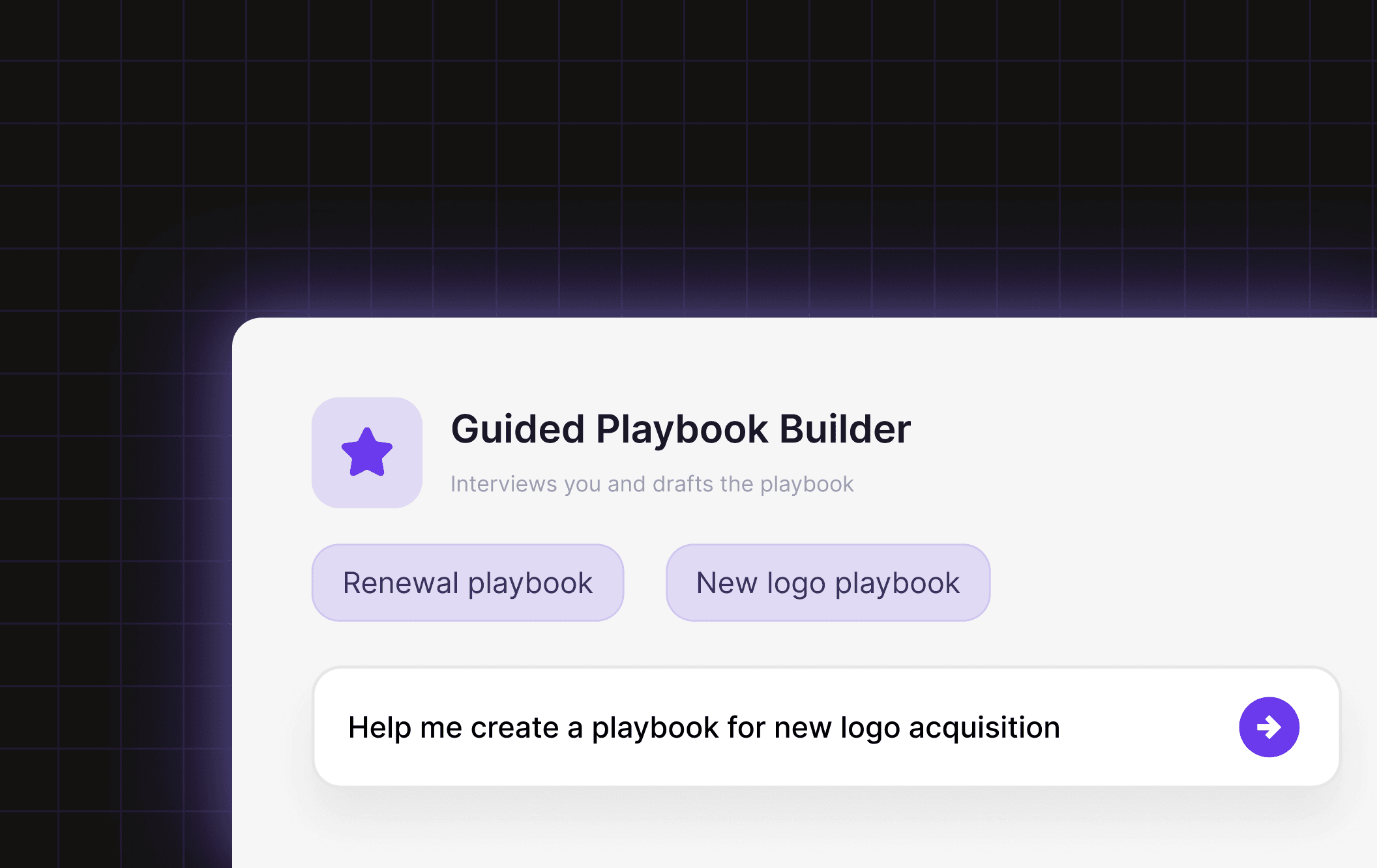
To accomplish this, we’ve built agents on both sides of the selling motion. The Playbook Builder Agent lets RevOps create and deploy playbooks using natural language prompts. An admin describes the selling motion, the target segment, the defaults, the guardrails, and the system generates a working playbook that's live in minutes. There are no Salesforce flows, no custom fields, and no developers.
The Transaction Agent activates the right playbook for the right rep on the right deal, automatically. It matches the playbook to the rep's role, the customer's industry, and the opportunity attributes. It asks questions only when necessary and applies smart defaults everywhere else. If a rep tries to exceed a discount cap, the playbook enforces it. If the customer is missing a product they should have, the agent surfaces the white space.
For the first time, companies can maintain a living set of playbooks tuned to how they actually sell, and have every quote run through them automatically.
Guided selling doesn't start when a rep opens a quote. By the time a quote is being built, the organization has already accumulated everything the selling motion needs: discovery notes, discovery recordings, historical pricing, procurement requirements, implementation dependencies, customer emails, and usage signals. Most companies have spent years building and refining that context across dozens of systems, but none of it has ever made it into the selling motion.
That is what MCP-powered integrations make possible. Before a rep says a word, the agent has already done the work, across Gong recordings, pricing history from Salesforce, open dependencies from Jira, and procurement requirements from the shared document repository. The playbook orchestrates those connections behind the scenes and surfaces what the rep needs, in context, without asking them to go find it.
The outcome is more than a better quote. It’s a transaction that reflects the full context of the customer relationship: products, pricing, commercial terms, billing preferences, contractual requirements, and negotiation history. Most guided selling tools help a rep configure products. Nue's guided selling helps a company bring its collective intelligence to bear on the entire commercial relationship. The quote is one artifact. The revenue transaction is the objective.
For RevOps, the change is operational. Updating a playbook takes minutes instead of weeks. New products, new segments, pricing models can all go live without waiting on engineering. Companies can support multiple selling motions without growing the RevOps or engineering team to match, because the architecture absorbs the complexity.
For reps, the change is experiential. The quote feels like a conversation, and guardrails are enforced automatically, so compliance happens in the background. White space analysis is built into every quote, which means expansion isn't something that happens when a rep thinks of it. It happens on every quote, built into the motion. New reps can sell correctly from day one because the playbook carries the necessary institutional knowledge.
The CPQ industry has treated guided selling as a front-end problem for years, investing in better rep experiences while the configuration layer underneath stayed manual and brittle. That's why every generation of guided selling tool has felt like an incremental improvement rather than a genuine shift. The forms got smarter and the flows got more polished, but building and maintaining the playbooks behind them still required an engineer.
Nue's architecture solves both sides. One agent helps RevOps build and maintain playbooks in natural language. Another agent executes those playbooks on every quote, for every rep, in real time. And through MCP connections, that execution draws on the full context of the customer relationship, not just what lives inside a single application.
Most guided selling solutions focus on helping a rep configure products. AI-guided revenue should help a company configure the entire commercial relationship.
The quote is one artifact. The real objective is creating the right revenue transaction using the collective intelligence the organization already possesses today and will continue to accumulate over time.
When updating a playbook is as easy as describing what you want, the selling motion always reflects how the company actually prices, packages, and goes to market. The strategy lives in the system, not in someone's head.
Guided selling tools have always focused on the rep experience while ignoring the configuration side that's always required by a developer.
- Organizations already hold years of context across CRM, conversation intelligence, documents, and transaction history. AI should synthesize that context, not replace a form with a conversation.
- Fully autonomous AI quoting trades control for speed. The right model is human-defined, AI-executed.
- Nue built agents on both sides of the selling motion: one that helps RevOps build playbooks in natural language, and one that executes them on every quote automatically.
- Through MCP connections, AI can draw on external systems like Salesforce, Gong, Jira, and Slack to surface the right context without asking the rep to gather it manually.
When playbooks are easy to create and maintain, companies can support multiple selling motions without scaling engineering to match.
Talk to sales to see how Nue's agentic revenue architecture powers guided selling end to end.